
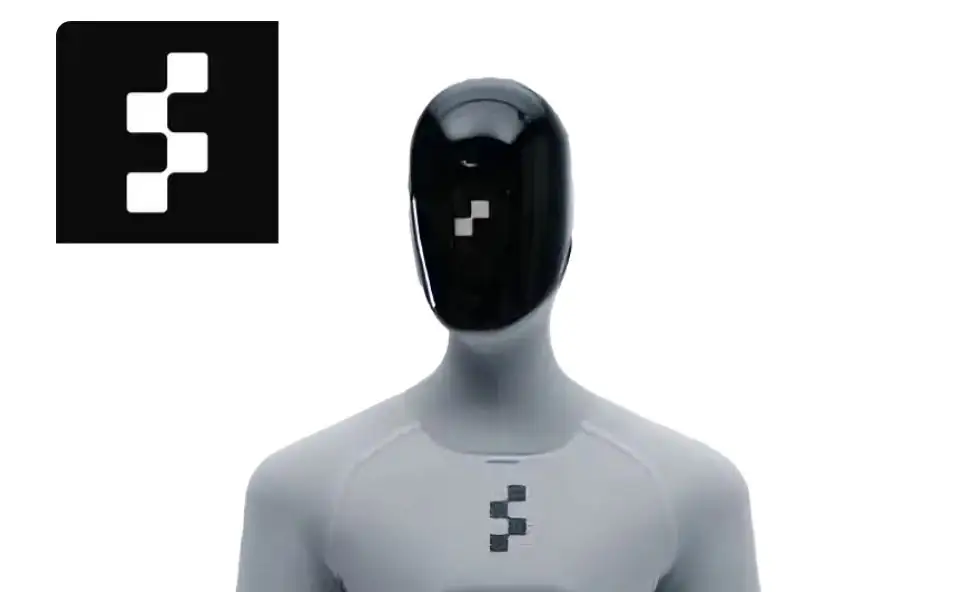
Figure AI was founded in 2022 in Sunnyvale, California. By May 2026 — less than four years later — the company had built, deployed, and retired two generations of full-size humanoid robots, launched a third that TIME magazine named the best invention of the year, and run a live-streamed 81-hour autonomous demonstration watched by ten million people.
Three generations in three years. That is the metric that deserves attention — not the spec sheet of any individual robot, but the pace at which this company has been willing to scrap what worked, learn from it, and ship the next version. In an industry where "we'll have a commercial robot by next year" has been the perennial promise since the 1980s, Figure AI's trajectory is genuinely different. Here is what they built, when they built it, and what each iteration tells us about where this is actually going.
| Spec | Figure 01 | Figure 02 | Figure 03 |
|---|---|---|---|
| Announced | May 2023 | August 2024 | October 2025 |
| Key milestone | BMW deployment (Jan 2024) | 30,000 vehicles at BMW | TIME Best Invention 2025 |
| Height | 1.68 m | 1.68 m | ~1.68 m |
| Weight | 60 kg | 70 kg | ~70 kg |
| Hand DOF | ~6 DOF (simplified grippers) | 16 DOF / hand (5 fingers) | 16 DOF / hand (5 fingers) |
| Total DOF | ~40+ | 35 | N/A (not disclosed) |
| Battery | ~5 h runtime (electric) | 2.25 kWh LiOn — 5 h | Wireless inductive (2 kW) |
| Charging | Manual | Autonomous docking (~1.5 h) | Wireless self-dock (autonomous) |
| Payload | 20 kg | 25 kg | 20 kg (upper body) |
| Max speed | ~1.2 m/s | N/A (not disclosed) | ~1.2 m/s |
| Sensors | Basic RGB cameras | 6 cameras + mic + speaker | Redesigned suite, cameras + mic |
| AI system | Proprietary (early neural net) | Helix VLA (zero-shot, multi-robot) | Helix 02 (full-body autonomy) |
| Connectivity | N/A | N/A | Wi-Fi, LTE |
| Target market | Industrial | Industrial (automotive) | Home consumer |
Figure 01 — The Starting Point (2023)
Figure 01 was announced in May 2023. At the time, the robotics world was cautiously optimistic about the humanoid form factor but deeply skeptical that any startup — no matter how well-funded — could meaningfully challenge Boston Dynamics, which had been building humanoids for decades. Brett Adcock's company had been operating for less than a year.
What Figure 01 was, and what it was not, is worth being precise about. It was a proof of concept. The robot could walk upright, carry payloads up to 20 kg, and navigate environments that were too unstructured for traditional industrial automation. What it could not do was anything requiring real hand dexterity. The grippers were simplified — functional for moving boxes, useless for anything requiring fine motor control. There was no production-grade AI system running onboard, and the compute was nowhere near capable of running the kind of vision-language-action models that would define the next generation.
What mattered about Figure 01 was what it proved: a small team with startup resources could build a humanoid robot that walked, carried things, and survived a real factory floor. In January 2024, BMW signed a commercial deployment agreement to use Figure 01 at their Spartanburg, South Carolina plant — the first time a humanoid robot from a startup was deployed in actual production. The robots were not doing assembly. They were moving parts, stacking components, navigating a factory that was not designed for them. Modest by later standards. Historic in context.
"We designed Figure 01 from scratch to work in factories exactly like BMW's." — Brett Adcock, Figure AI, 2024
Figure 01's five-hour runtime was competitive on paper. In practice, the manual charging process was the kind of friction that makes enterprise deployment difficult. You need a human to plug in the robot. That constraint alone shaped how Figure 02 was engineered.
Figure 02 — The Hands That Changed Everything (August 2024)
Fifteen months after Figure 01's announcement, Figure 02 arrived. And the single most important thing that changed between the two generations was not the speed, not the weight, not the battery architecture — it was the hands.
Figure 01 had simplified grippers. Figure 02 has five-fingered hands with 16 degrees of freedom per hand — the same DOF count as a human hand. That number is not cosmetic. It is the threshold between a robot that can move things and a robot that can manipulate them. Picking up an egg without breaking it. Inserting a bolt into a housing. Orienting a part in mid-air before placing it into an assembly fixture with a tolerance of two millimetres. Everything that separates industrial automation from genuine dexterity sits behind that number.
The second transformative change was Helix VLA — Figure AI's first vision-language-action model, deployed onboard the 02. This was the first commercial humanoid running a zero-shot manipulation system: the robot could handle objects it had never specifically trained on, using a general model rather than a task-specific script. Multi-robot coordination also became possible for the first time — multiple Figure 02 units could collaborate on the same task without a centralized controller assigning roles.
The battery upgrade addressed the friction point Figure 01 had left unresolved. A 2.25 kWh lithium-ion pack integrated into the torso provided five hours of runtime and — crucially — could be recharged via autonomous docking in approximately 90 minutes. No human needed to plug it in. The robot found the dock, positioned itself, and charged. That single change dramatically simplified enterprise deployment economics.
At BMW Spartanburg, Figure 02 moved from component transport to active assembly tasks. By the time it was retired, the fleet had contributed to the production of over 30,000 vehicles. That is not a pilot program. That is production.
"Figure 02 is capable of performing a wide range of tasks in our factory — tasks that are unsafe, ergonomically challenging, or simply tedious for humans." — BMW Group statement, 2024
Figure 03 — The Robot That Comes Home (October 2025)
Figure 03 was announced in October 2025, fourteen months after Figure 02. TIME magazine named it the best invention of the year. The cover image showed it doing laundry.
That image is the key. Figure 01 was built for factories. Figure 02 was refined for factories. Figure 03 is the first humanoid from Figure AI — and one of the very few from any company — explicitly designed for the home. The shift in target market is not cosmetic. It required a completely different set of design constraints: quieter operation, safer navigation in unstructured spaces, the ability to handle the enormous variety of objects that domestic life involves, and an AI system capable of interpreting "can you water the plants" without a detailed instruction set.
Helix 02 is the answer to that last requirement. Full-body autonomy: the ability to coordinate arms, hands, torso, and legs simultaneously to perform compound tasks. Doing laundry means picking up an item from a pile, identifying it as clothing, navigating to the machine, loading it, and starting the cycle. No single-step manipulation. No pre-programmed paths. Task decomposition in real time, end to end. Every inference computation runs onboard the robot — no cloud connection, no remote operator.
The charging solution tells the same story in hardware terms: wireless inductive charging at 2 kW, with autonomous docking. Figure 03 drives itself to the charging pad, positions itself, and charges. The robot manages its own energy budget. In a home context, that matters more than battery capacity numbers. A robot that can plug itself in is a robot you can actually leave alone.
In May 2026, three Figure 03 units sorted 100,000 packages in 81 consecutive hours without a single mechanical failure or human intervention — the most ambitious live demonstration of autonomous humanoid capability on record. Figure AI's BotQ manufacturing facility is targeting 12,000 units per year. This is not a concept anymore.
"Figure 03 is designed for the home. That's where we believe the largest opportunity for humanoid robotics exists." — Brett Adcock, TIME Best Inventions feature, October 2025
What Three Iterations Reveal
The pattern across these three generations is not difficult to read once you see it. Each version solved a fundamentally different problem — and each problem was only visible because the previous one had been solved first.
Figure 01 answered the question nobody had answered with startup resources: can a humanoid robot walk, carry things, and survive a real-world industrial deployment? The answer was yes. The question didn't need answering with perfect dexterity or advanced AI — it needed answering with a working robot that a real company was willing to pay for and put on a factory floor.
Figure 02 answered the question that Figure 01's deployment made inevitable: now that the robot walks and carries, can it actually manipulate? Sixteen degrees of freedom per hand and a vision-language-action model moved the capability boundary from "logistics support" to "assembly worker." Thirty thousand vehicles proved the economics.
Figure 03 is answering a harder question: can a robot navigate the chaos of a human home? The factory is, by comparison, a controlled environment — same floor layout every shift, known objects in predictable positions, consistent lighting. The home is none of those things. The clothes are never in the same place twice. The counter is cluttered differently every morning. Helix 02 exists to handle that chaos — and the decision to target the home market with this generation tells you exactly where Figure AI believes the next decade is going.
The pace of this iteration is the most significant data point of all. From Figure 01 to Figure 03 in 28 months. The robotics industry spent thirty years promising commercial humanoids and failing to deliver them. Figure AI built, deployed, and retired two generations of them in the time it takes a conventional automaker to redesign a door handle. Whatever Figure 04 turns out to be, compound interest says it will arrive before most people have finished drawing conclusions about Figure 03.
Three robots. Three years. Three fundamentally different answers to three fundamentally different questions. The line connecting them — from a pair of grippers moving car parts to a 16-DOF hand doing laundry under its own judgment — is not a straight line. It is the curve that compound interest always draws, just before the world notices the direction it is heading.
Figure 03 is one of the most closely watched humanoid robots in the industry. See how it compares to the competition.
- Figure 03 — full review and specs
- Figure AI brand page — full history, funding, and production roadmap
- Agility Robotics Digit — the only other humanoid already deployed in logistics at scale
- Boston Dynamics Atlas — still the benchmark for locomotion and dexterity