
If you follow electric vehicles — and if you're reading a robot review site in 2026, there's a reasonable chance you do — you already know Xpeng. They're one of China's most serious EV manufacturers: direct competitors to Tesla in the Chinese market, with advanced driver assistance tech that has held up to independent scrutiny. They're the kind of company that engineers take seriously even when journalists find them boring.
Which is exactly why Xpeng entering humanoid robotics with Iron is interesting to me in a way that a pure-play robotics startup would not be. The question isn't whether they can build a cool prototype. The question is whether there's genuine technological transfer from making autonomous electric vehicles to making autonomous electric humans. And I think the answer is: more than you'd expect.
"Iron is not a side project. It is the natural extension of everything we have learned about moving things through the world safely and autonomously." — He Xiaopeng, Xpeng CEO
What Is Xpeng Iron?
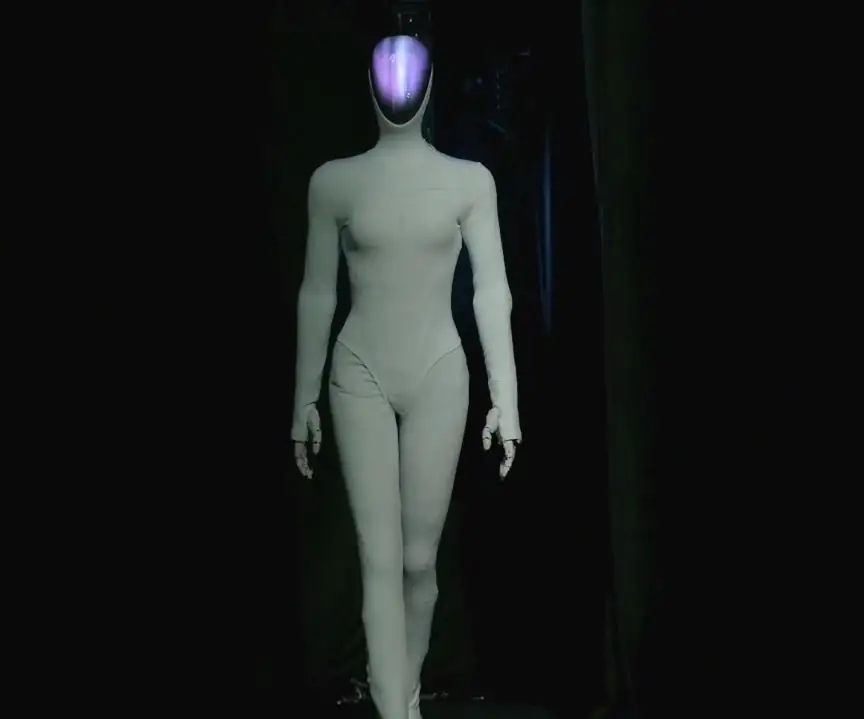
Iron was unveiled publicly in mid-2024 as Xpeng's answer to the humanoid robot moment. It is a bipedal, full-size humanoid robot — 178 cm tall, approximately 70 kg — designed initially for Xpeng's own manufacturing facilities and later for third-party industrial customers. The design is striking: it has that slightly uncanny quality that the best humanoid robots tend to share, where the proportions are recognisably human but the surface is deliberately machine.
Xpeng has committed to having Iron operational in their own factories by the end of 2025. They have not yet announced a commercial sale price, which is either admirable restraint or a sign that they haven't worked it out. Having spent time in product development, I suspect it's some of both.
| Specification | Xpeng Iron |
|---|---|
| Height | 178 cm (5'10") |
| Weight | ~70 kg |
| Degrees of Freedom | 60+ DoF (full body) |
| Walking Speed | ~1.2 m/s (targeted) |
| Payload | ~35 kg |
| Hand Dexterity | 15 DoF per hand |
| AI Stack | Xpeng-proprietary (XNGP-derived) |
| Vision System | Cameras + LiDAR + IMU |
| Initial Deployment | Xpeng factories, 2025 |
| Commercial price | TBA |
The EV Transfer Thesis
This is the part I keep coming back to, because it's the part that separates Xpeng from most competitors. When they say they're transferring technology from EVs to robots, it sounds like marketing. It might not be.
Consider what an electric vehicle actually is, mechanically: a collection of actuators (motors), sensors (cameras, radar, LiDAR), a compute stack, a power system, and a software layer that tries to make all of it work together in an uncontrolled environment full of unpredictable obstacles. Now consider what a humanoid robot is. The overlap is substantial.
Specifically, what Xpeng has that most robotics startups don't:
Motor expertise. EV manufacturers design and produce electric motors at scale. Humanoid robot joints are, at their core, precise electric motors with torque sensing. The engineering discipline translates directly. Xpeng's motor team is not starting from scratch.
Battery integration. Running a humanoid robot for eight hours on a single charge is a hard problem. It's a hard problem Xpeng has been solving, in a different form, for years. Energy density, thermal management, pack design — these are table stakes for EV makers and novel challenges for most robotics companies.
XNGP — their autonomous driving stack. Xpeng's Highway NGP and City NGP are among the most capable ADAS systems in the Chinese market. They process multi-modal sensor data in real time to make navigation decisions in chaotic, unpredictable environments. That is, at a high level, what a robot navigating a factory floor needs to do. The architecture won't map one-to-one, but the lessons — and the engineers — do transfer.
What Makes Iron Different From the Pack
We are, right now, in a moment where every serious technology company with deep pockets is announcing a humanoid robot. Apple hasn't (yet), but give it time. The announcements blur together. Iron stands out for three specific reasons that I find genuinely interesting rather than merely impressive-sounding.
The hands. Iron is specified with 15 degrees of freedom per hand — more than Tesla Optimus, comparable to the most dexterous academic robots, and enough, in theory, to handle the fine-grained manipulation tasks that separate "useful in a factory" from "useful anywhere near a human environment". Whether those specs translate to real-world dexterity is unproven. But the intent is there in the design.
The target payload. At 35 kg payload capacity, Iron is positioned for genuinely heavy industrial work — not just moving around light parts, but replacing humans in physically demanding logistics and assembly tasks. This is a different product decision than Tesla Optimus's more conservative payload, and it says something about which market Xpeng is prioritizing first.
The decision to deploy in-house first. Xpeng's stated plan is to run Iron in their own factories before selling it to anyone else. That's not a novel idea — Tesla is doing the same with Optimus — but it matters enormously for product quality. Internal deployment creates accountability. If the robot breaks your own factory, you fix it faster than if it breaks someone else's.
The Honest Uncertainty
I've been thinking about robots since I was a teenager in Spain reading The Caves of Steel, and one thing Asimov's fiction got absolutely right is that the interesting problems with robots are never purely technical. Iron has impressive specifications, credible institutional backing, and a coherent technology thesis. But specifications are not products.
Xpeng has never shipped a robot. They have shipped cars, and cars are also complex, but a car that fails stops. A robot that fails might knock something over, drop something fragile, or fall down in a way that injures someone. The safety engineering for a mobile humanoid is categorically harder than for a vehicle that stays in a lane.
There's also the question of software maturity. XNGP is a good system for driving. It is not, as of now, a system for manipulation, which requires a fundamentally different kind of spatial reasoning and failure tolerance. Xpeng will need to build that stack essentially from scratch, even if the underlying infrastructure helps.
And then there's geopolitics. Xpeng is a Chinese company. In the current environment, that creates real complications for commercial deployment in European or North American industrial facilities, regardless of how good the product is. I say this not as a political statement but as a product observation: the addressable market for Iron in 2026 is probably smaller than the technology warrants, and that gap may persist for reasons that have nothing to do with engineering.
Where I Land
I find Iron genuinely exciting in a way that surprises me, because Xpeng was not a name I associated with robotics before this announcement. The EV transfer thesis is more substantial than I initially gave it credit for. The specifications are ambitious but not absurd. The internal deployment commitment is the right move.
What I'm watching for over the next twelve months: footage of Iron working continuously in an actual Xpeng factory, handling a variety of tasks, with acknowledged failure rates. Not a demo video. Real operational data. That's the gap between a compelling announcement and a product I'd be comfortable writing a full review of.
The fourteen-year-old who read I, Robot cover to cover would have found Iron almost unbearably exciting. The adult who spent fifteen years as a lawyer reading contracts and another decade building software products wants to see the error logs and the MTBF figures before he gets carried away.
Both of those people are me, and both of them are watching Xpeng very closely.
Xpeng Iron is still pre-commercial. If you need a humanoid robot today, here are the closest alternatives with independent scores.
- Figure 03 — comparable 16 DOF hands, Helix AI, home-oriented
- Agility Robotics Digit — proven industrial deployment, similar 35 kg payload class
- Apptronik Apollo — 25 kg payload, NASA heritage, logistics focus
- Fourier GR-2 — 53 DOF, open-source stack, available now from ~$55,000