
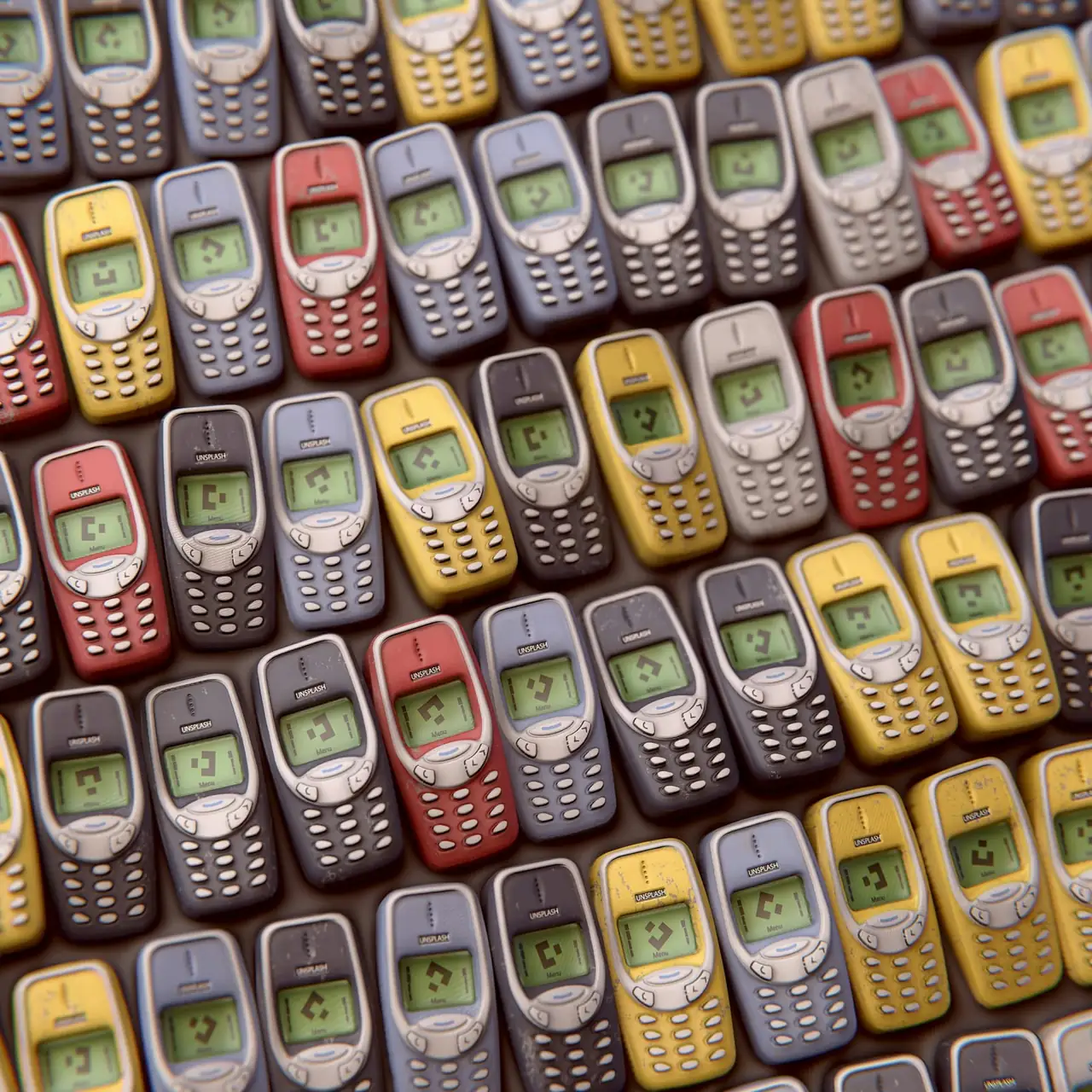
A reader asked me a question over the weekend that I have not been able to put down. He framed it cleanly, and it stuck because it is the right framing. In the next decade of humanoid robotics, is Unitree going to be the next Nokia — or the next iPhone?
Both are real possibilities. Both fit the evidence of what just happened. And the gap between them is the most important strategic question in robotics today. So let me make the case for each playbook honestly, score where Unitree actually stands on the seven things that separated Apple from Nokia between 2007 and 2014, and then tell you where I land.
Unitree has won the first battle of the humanoid war. The decade ahead is the one that decides whether they wrote the iPhone story or the Nokia one — and the difference is almost entirely within their control.
What Unitree Has Already Done
Before we argue about the future, let's anchor the present. In the past seven days, a mid-cap Chinese robotics company shipped two announcements the rest of the industry will spend the next year reacting to. The GD01 transformable mecha — the world's first mass-produced piloted humanoid. And UniStore, a Fortnite-style developer marketplace that quietly turns every choreographer and reinforcement-learning hobbyist on the planet into a potential supplier of robot behaviour.
Those two shipped on top of a foundation nobody else in the sector has assembled:
- Best-in-class motor skills. Unitree robots dance, run, fight and recover from falls with a fluidity that Figure, 1X and even Boston Dynamics have not matched at consumer prices.
- The broadest production lineup in the industry. R1, G1, H1, B2-W, Go2, GD01 — six shipping platforms across price tiers from prosumer to industrial.
- The only humanoids at consumer price points. The R1 is the only humanoid in the four-digit bracket actually arriving in real customers' homes in 2026.
- A live developer ecosystem before anyone else built one. UniStore is operational, with developers shipping skills and getting paid.
That is a list a 2007-era Nokia would have killed for. It is also a list a 2007-era Apple would have recognised. Which is exactly why the question is interesting.
The iPhone Case — Why Unitree Could Win the Decade
The iPhone moment was not the hardware. The phones themselves were impressive, but the RAZR was impressive too, and the RAZR did not end up defining a decade. The thing Apple did that nobody else did was combine a category-defining product with a developer marketplace eighteen months later, and then refuse to let go of either side of that flywheel for the next fifteen years.
Unitree just made the same move. The R1 is the wedge product — the affordable, mass-market machine that builds the installed base. UniStore is the App Store moment — the place where third parties get paid to extend the platform without the manufacturer having to grow its engineering org to keep pace. That is not a Nokia playbook. That is, structurally, exactly the move Apple made in 2008.
Three things have to hold for the iPhone story to be the right one:
Cadence has to keep up
Apple shipped one major iPhone per year for fifteen years without missing. Unitree's bar is now the GD01-and-UniStore week. The moment they slow down, the narrative flips overnight, because "years ahead" in robotics is a story that has to be retold every quarter or the listener stops believing it.
The ecosystem has to compound
Marketplaces are winner-take-most. If UniStore reaches a critical mass of developers and installed base before a competitor launches a credible alternative, the lock-in is real and decade-defining. If it doesn't, it becomes Symbian — a perfectly fine ecosystem that mattered for two years and then mattered to nobody.
The team has to stay hungry
Apple kept its founder until 2011 and his replacement until today. Whatever you think of Tim Cook, the company has never gone soft on shipping. Unitree, on the evidence of the past week, still acts like a challenger — small, fast, willing to drop the GD01 with an eighteen-second launch video and let the work speak. That hunger is the asset that does not show up on a balance sheet, and it is the one that decides which playbook they end up in.
The Nokia Case — Why It Could Go the Other Way
Nokia in 2007 looked, by every objective measure, more dominant than Unitree looks today. Fifty per cent global handset market share, a vertically integrated supply chain, best-in-class hardware, a real developer ecosystem in Symbian, and the loyalty of nearly every carrier on Earth. Six years later they sold the handset business to Microsoft for parts. The history of that collapse is worth saying out loud, because the forces that did it are lining up around humanoid robotics right now.
The disruptor played a different game
Nokia was building better phones. Apple was building a general-purpose computer that happened to also be a phone. By the time Nokia understood the product category had changed under them, the market had already chosen. The analogue in robotics is uncomfortable but obvious: Tesla's Optimus is not a humanoid robot competing with the R1. It is Tesla's autonomy stack with arms attached, designed to be manufactured at car-industry scale by an organisation that already ships a million complex mechatronic units a year. That is a different category of capability, and Nokia's lesson is that category-shift beats product-quality every time.
Scale broke every advantage Nokia had
Best-in-class motor skills built by hundreds of Unitree engineers, at hundreds of thousands of training hours per quarter, look very different next to thousands of engineers and millions of training hours per quarter. The gap closes faster than Unitree can extend it. Best-in-class is a snapshot; the race is about who sustains the lead at volume.
The org chart killed Nokia, not the competition
The most painful part of the Nokia story is that they saw the iPhone coming, had internal prototypes, had the engineering talent. What they did not have was the willingness to cannibalise their own market. They became big, slow, internally political, reluctant to ship the thing that would replace what was making them money. If Unitree adds the senior vice president of strategic alignment, the obituary writes itself.
The Scorecard — Where Unitree Actually Sits Today
Forget the rhetoric for a second. The seven dimensions below are the ones that historically separated the iPhone outcome from the Nokia outcome. Here is my honest read on where Unitree sits on each of them in May 2026.
| Dimension | Status | Reads Like |
|---|---|---|
| Category-defining product | Yes — R1 | iPhone |
| Live developer marketplace | Yes — UniStore | iPhone |
| Best-in-class core capability | Yes — motion | iPhone |
| Shipping cadence | Two categories in 7 days | iPhone |
| Hungry, founder-led culture | Visible in every launch | iPhone |
| Manufacturing scale vs disruptor | Tens of thousands vs millions | Nokia |
| Capital depth vs disruptor | Cash-flow funded | Nokia |
| Regulatory / geopolitical access | Chinese export risk | Nokia-adjacent |
| Autonomy / reasoning stack | Strong motion, weaker brain | Mixed |
Five rows green, two red, two amber. That is a company in a much better starting position than Nokia held in 2007 — but the two red rows are the two that history shows decide the ten-year outcome more than any other. Manufacturing scale and capital depth are the structural ingredients no amount of execution brilliance fully compensates for.
What Actually Decides Which Story Comes True
A category-defining product every six to nine months. The week of UniStore and GD01 is the bar Unitree has now set for themselves. Hold it for three years and the Nokia comparison becomes ridiculous in hindsight. Miss two quarters and it becomes prophetic.
Nokia's fatal failure was not technical — it was the refusal to ship the product that would have killed their own existing business. The Unitree test of this comes when the GD01 successor undercuts the H1, or when UniStore commoditises an in-house product line. Whether they ship it anyway is the single biggest signal to watch.
If Western governments classify humanoids the way they have classified semiconductors and drones, Unitree loses access to half their addressable market overnight. This is the biggest external risk on the board, and it is almost entirely outside Unitree's control. A European or American JV is the move that hedges it — and the absence of one is the most worrying signal in the file.
Companies that build the category rarely have the appetite to defend it. The Unitree team still acts like a challenger — small, fast, refusing to cosplay as an incumbent. That hunger is the variable Tesla and Figure cannot buy at any price, and the one that closes the manufacturing-scale gap better than any other lever they have.
Where I Actually Land
One paragraph, then the supporting arguments.
My base case is Unitree writes a hybrid of both stories. They are decisively the iPhone of the next eighteen months — by the end of 2027 nobody serious will argue otherwise. The harder question is the 2028 to 2032 window, when Tesla and Figure reach the production scale that Nokia was already operating at when Apple first shipped. In that window, the manufacturing-scale and capital-depth gaps start to bind. Whether Unitree's lead on motor skills, ecosystem and culture is enough to defend the position depends on whether they keep doing what they did this week, week after week, for the next thirty-six months.
The most likely outcome, if I had to commit, is a market split rather than a clean iPhone or Nokia ending. Unitree stays the platform of choice for prosumer and developer-led use cases — the premium, ecosystem-rich, motion-best brand. Tesla and Figure split the mass-market mass-production segment between them with cheaper, more mass-produced, less capable hardware. Boston Dynamics, Apptronik and 1X carve out enterprise verticals. That is not Nokia getting flattened by Apple. It is closer to Sony surviving the iPod and the iPhone by being unmistakably Sony.
Which, frankly, is a much better outcome than either bookend of the question.
The Verdict Depends Almost Entirely on Unitree
Nokia did not lose because of Apple. Nokia lost because Nokia stopped being Nokia. The Apple of 2007 was, by every measure, smaller and less resourced — and they out-shipped Nokia year after year because they were still hungry. The most underrated fact in consumer-tech history is that the disruptor's structural advantages only mattered because the incumbent stopped competing.
Unitree, on the evidence of the past week, is acting like a company that has read the Nokia case study and decided to write a different one. Two product categories in seven days, live, with pricing, against a backdrop of public Tesla and Figure announcements that were mostly slideware. That is not how a complacent incumbent behaves. That is how Apple behaved in 2008.
The Nokia outcome is possible. It is also almost entirely within Unitree's control. As long as the team keeps pushing, keeps shipping, keeps refusing to defend what they have already built, the structural advantages a future Tesla or Figure bring to the table are not enough to flatten them.
Our Verdict: Closer to iPhone, With a Real Risk of Nokia
We will see how this article ages in twelve months. What is clear right now is that Unitree is positioning itself convincingly. The key, as it always is in this kind of race, is continuity, adaptability, and refusing to fall asleep on their laurels the way other companies have done before them. With a team this hungry and a launch cadence this aggressive, it really does not look like that is going to happen.
Today, May 2026, the evidence reads iPhone. The scorecard reads iPhone on the five rows that depend on Unitree's own execution, and Nokia on the two rows that depend on capital and manufacturing scale. The fight over the next thirty-six months is whether the first five hold long enough to compound past the last two. If they do, the Nokia comparison will look ridiculous in hindsight. If they do not, the answer to the question in the headline is the wrong one — and you read it here first.
Either way, the next eighteen months are going to be the most consequential window this industry has ever had. And right now, Unitree is the company you have to beat.