← Back to comparator
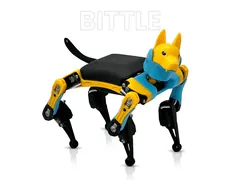
Petoi Bittle
Open-source programmable robot dog for makers and educators
60.2*
out of 100
Good
$349
Released 2021
Partial score — derived from manufacturer data, not hands-on testing: published specifications plus verified secondary sources. Hands-on subcategories are pending physical testing.
Ver en Amazon →
Overview
Petoi's Bittle is the most popular open-source robot dog in the world. At $349, it offers an agile 8-servo quadruped platform that you can program in Arduino, Python or via community ROS packages. Available fully assembled or as a DIY kit, Bittle is an ideal starting point for students, makers and researchers who want to understand how quadruped locomotion works. Its thriving open-source community has produced dozens of gait algorithms, obstacle courses and AI vision integrations.
Score Breakdown
Behaviour Realism
Pending
Movement Quality
Pending hands-on
Expressiveness
Pending hands-on
Personality Depth
Pending hands-on
Category weight: 29%
Responsiveness & AI
Pending
Touch Response
Pending hands-on
Voice Recognition
Pending hands-on
AI Learning & Adapt
Pending hands-on
Category weight: 25%
Ease of Use
Pending
Setup & Pairing
Pending hands-on
App & Control
Pending hands-on
Category weight: 15%
Build Quality
60%
Build & Durability
Pending hands-on
Battery Life
~1 hour walking
6/10
Category weight: 14%
Value for Money
73%
Price / Performance
$349 strong maker value
7/10
Market Availability
Amazon US / RobotShop
8/10
Category weight: 12%
Ecosystem & Platform
30%
App Marketplace
No app store (open SDK)
1/10
Ecosystem Maturity
Very active GitHub community
6/10
Category weight: 5%
Available skills
We haven't catalogued specific skills for the Petoi Bittle yet.
We track public GitHub repos and official sources that explicitly target this robot;
as the ecosystem grows, new motions, behaviours and SDKs will appear here automatically.
Technical Specifications
Form factor
Quadruped dog (8 servo motors)
Controller
NyBoard (Arduino Nano compatible)
Battery
7.4V 1,000mAh LiPo, ~1 hour walking (vendor FAQ)
Weight
~280 g (assembled)
Length
~20 cm
Connectivity
Bluetooth (standard), Wi-Fi module optional
Programming
Arduino, Python, Scratch
ROS support
ROS1/ROS2 (community packages)
Pros & Cons
Strengths
- Fully open-source hardware and software — modify everything
- Arduino and Python programmable out of the box
- Community ROS1/ROS2 packages for robotics research
- Affordable at $349 — among the cheapest capable programmable quadrupeds
- Available fully assembled or as a DIY kit for learners
Weaknesses
- Kit version requires assembly time (20–40 min)
- No built-in screen, microphone or AI features
- ~1 hour walking before LiPo recharge needed (vendor FAQ)
- Limited expressiveness compared to consumer-grade robot pets
Specs-based analysis — score derived from manufacturer data. How we score