
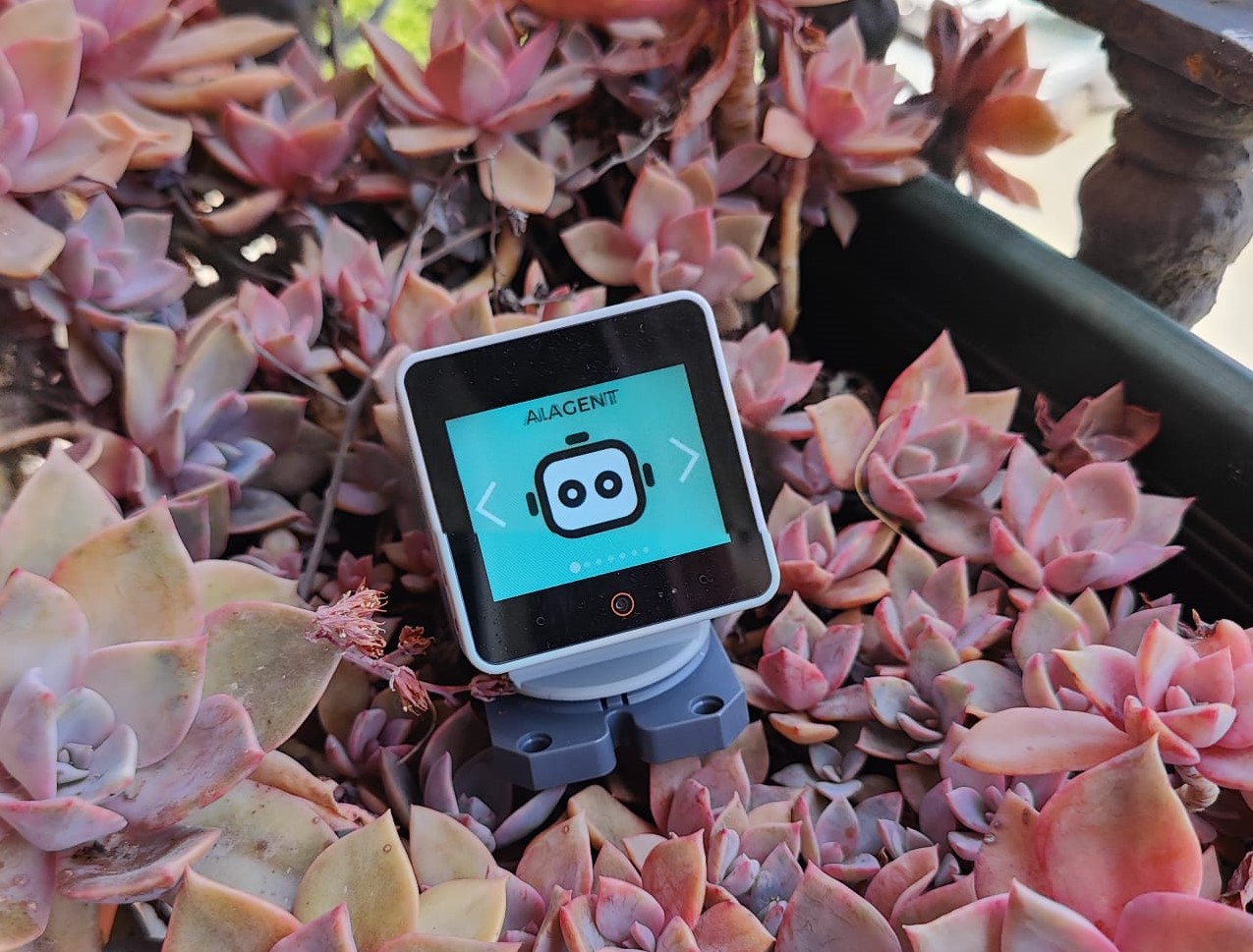
Forty-five days ago, opening the box that held my first robot felt like a small event. I'd backed Stack-chan before it existed, written up how the first two weeks went, and watched a lot of people light up the moment its little face blinked on. Six weeks in, I have a verdict — and it's two things at once. Stack-chan is the best possible first robot, and it has left me wanting much, much more.
Both of those are true, and the reason they're both true is the same reason: this is, by design, an extremely low-cost project. That's its gift and its ceiling. So here's the honest 45-day account — what I still love, what the price quietly costs you, and the one conviction Stack-chan has burned into me about what a robot actually needs to be.
- What I love: opening my first robot, giving it a personality and a voice, the head that turns to find you, the charm, the singing — and that it's genuinely open source.
- The catch: it's very cheap, and you feel it everywhere — even in the AI. Everything is a little limited.
- The lesson: mobility is everything. A robot that can't move beyond its head is a voice assistant with a face.
- What's next for me: a robot that moves — wheels or legs — and can cross a room or a garden.
- The bigger picture: the great robots now being built make the future feel imminent — a fact China clearly understands, and most of Europe hasn't noticed.
What I still love after 45 days
Let me start with the affection, because it's real and it hasn't faded. The single best thing about Stack-chan is that it made me build and own my first robot. There's a particular joy in opening the hardware, powering it on, and then sitting down to give it a self: a name, a voice, a language, a personality, even the AI model behind its replies. You don't configure Stack-chan so much as raise it a little. It moves its head to follow you, and those two small servos do an outsized amount of work — they're most of what sells the illusion that something is there. It's charming in a way that surprises every single person who meets it. You can change its voice. It sings. And underneath all of it, it's fully open source — you own the platform, not a subscription to someone else's idea of a companion.
None of that is small. For getting a real human being — me — emotionally invested in a desktop robot for the first time, Stack-chan is close to perfect. It did the one job that matters most for a first robot: it made the whole category feel possible, and personal.
The honest part: you can feel the price everywhere
And yet. The reality is that the magic has a hard edge, and the edge is the price. Stack-chan is cheap — deliberately, admirably cheap — and after 45 days you feel that low cost in almost everything. The interactions are limited. The responsiveness is limited. And, more than I expected, even the AI feels limited — the conversation rarely rises above "neat demo," and the seams of a low-budget project show through constantly. I want to be clear that I don't say this with resentment. It's the opposite: I'm grateful. A project this inexpensive is exactly what put a robot on my desk at all, and what makes the door to robotics wide enough for normal people to walk through. But gratitude and hunger can live in the same sentence — and 45 days in, I'm hungry. I want the next robot, and I want it to be more.
Stack-chan's low cost is both the reason I have a robot and the reason I already want a better one. It's the perfect on-ramp — and on-ramps are not meant to be destinations.
The one thing I'm now certain of: mobility is everything
Two weeks in, I had a suspicion. I wrote then that a robot that cannot move is, functionally, a voice assistant in a cute enclosure — and that until legs entered the picture, that was the ceiling. Forty-five days in, that suspicion has hardened into a conviction I'd stake the whole hobby on: mobility is the single most important quality a robot can have.
Here's what I mean, concretely. I don't just want a robot that moves its head. I want one that has legs or wheels — that can get up, cross the living room, roll out to the garden, react to where I physically am rather than just where my voice is coming from. The instant a robot can come toward you, the relationship changes. It stops being a screen with a face and becomes a presence that shares your space. The head turning to find you is lovely; what you immediately want next is for the rest of the body to follow.
And I think mobility matters for a deeper reason than convenience: it's the hardest problem in robotics, and it's what makes a machine feel alive. Anyone can put a charming face on a screen. Getting a body to balance, walk, avoid the coffee table and recover from a stumble is brutally difficult — which is exactly why it reads as life when it works. It's why the whole industry obsesses over robots that can dance, race and run, why so much effort goes into teaching them to walk in simulation first, and why locomotion is one of the dimensions we weigh most heavily when we ask how you actually test a humanoid. Movement isn't a feature. It's the threshold between something that looks alive and something that acts alive.
What 45 days with a tiny robot taught me about the big ones
Here's the strange part. Living with the smallest, cheapest robot on the market is what made me finally feel the scale of what's happening with the biggest ones. When you've spent six weeks wishing your desktop companion could just take one step, and you then look at what's actually rolling off production lines — humanoids walking factory floors, doing half-marathons, being mass-produced ten thousand at a time — the future stops being an abstraction. It becomes imminent, and a little relentless. The gap between my head-tilting toy and a machine that can cross a warehouse is the entire story of this decade, and that gap is closing fast.
And this is where I'll allow myself an opinion, because it's the thing I can't stop thinking about. China has clearly understood that this is happening now, not someday. Its founders are racing, its government is already writing the rulebook, and its capital is pouring in. The United States feels it too, at least in pockets. But in Europe — where I sit — I genuinely don't think most people have registered it at all. We are still treating humanoid robots as science fiction or as somebody else's industry, while elsewhere they're being treated as the next industrial revolution. I'd go further: with the partial exception of the US, I'm not sure any country outside China is acting like this is imminent. I think that's a mistake, and I've laid out why in why robots are the next global trend and why I think they're the next great wave after AI. A €70 robot on my desk is what made that abstract argument suddenly feel personal and urgent.
What I want from my next robot
So Stack-chan has done something better than satisfy me: it has pointed me. I now know exactly what I'm looking for next, and it isn't a faster chip or a sharper screen. It's a robot that can move through the world — wheels first, legs eventually — that can follow me between rooms and out into the garden. That's a different budget and a different category, and the honest truth is the genuinely good mobile robots are still either expensive or early. But they exist now in a way they didn't a couple of years ago. We track the moving ones you can actually buy in our guide to the best humanoid robots you can buy in 2026 and the economics of affordable home robots — and that's exactly the shelf I'll be shopping from.
The verdict
I'm not going to pretend Stack-chan is something it isn't. It's a charming, limited, gloriously open little machine, and at its price that's not a complaint — it's the entire point. It got me in the door, gave me my first taste of raising a robot rather than just using one, and taught me, by its absence, the thing that matters most: a robot needs to move. As a destination, it falls short. As a beginning, it's hard to imagine a better one. It has left me wanting more — much more — and I mean that as the highest compliment a first robot can earn.
- The thrill of building and owning a first robot
- Deep personality: name, voice, language, AI model
- Head movement that genuinely sells the illusion of life
- Charming to everyone who meets it; it sings
- Fully open source — you own the platform
- The cheapest real door into robotics that exists
- You feel the low cost everywhere — even in the AI
- Interactions and responsiveness stay shallow
- No mobility beyond the head — it reacts, it can't act
- More a charming prototype than a daily companion
- Great as a start; not a destination