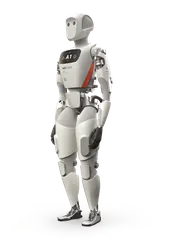
AgiBot X2 Neo (Lingxi X2)
Full-stack open-source humanoid running AgiBot's GO-1 embodied-AI model
Overview
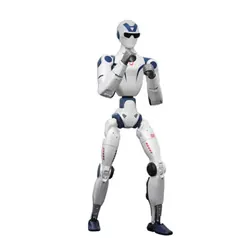
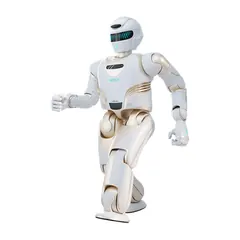
The AgiBot X2 Neo — sold in China as the Lingxi X2 — is a 1.31 m, 35 kg bipedal humanoid from AgiBot, one of China's largest humanoid-robot startups. Launched in 2025 and refreshed on the official store as X2 Neo, its headline feature is being full-stack open source: AgiBot released both the hardware design and the software, including its GO-1 vision-language-action foundation model trained on the openly published AgiBot World dataset. The X2 Neo carries 30 degrees of freedom (1 neck, 7 per arm, 3 waist, 6 per leg), a swappable 500 Wh battery good for roughly two hours, and a modest RGB-camera sensor suite, while the X2 Ultra New Version adds LiDAR, depth cameras, and a second neck DOF. AgiBot has shown it walking, running, cycling, and balancing on a hoverboard. At $25,600 on store.agibot.com it is positioned squarely at researchers and developers rather than consumers. We have not tested a unit, so this is a specs-based assessment.
Score Breakdown
Available skills
Technical Specifications
Pros & Cons
Strengths
- Full-stack open source — hardware and software released for developers, still uncommon among humanoids
- Runs AgiBot's GO-1 vision-language-action foundation model with the open AgiBot World dataset behind it
- Backed by one of China's largest humanoid startups, second only to Unitree in scale
- Swappable 500 Wh battery keeps a unit working through pack changes
- Agile demonstrated locomotion — bipedal walking, running, cycling, and hoverboard balancing
Weaknesses
- Slow ~2 m/s lab top speed and 1 kg continuous payload limit practical task work
- X2 Neo ships with a light sensor suite (RGB camera only) — LiDAR and depth need the Ultra variant
- Not hands-on tested by us — score is specs-based
- Western support and warranty depend on third-party resellers, not AgiBot direct
- No consumer app ecosystem; aimed at researchers and developers, not buyers